Hong Kong Spring Auction 2026
LOT 256
KAWARA On
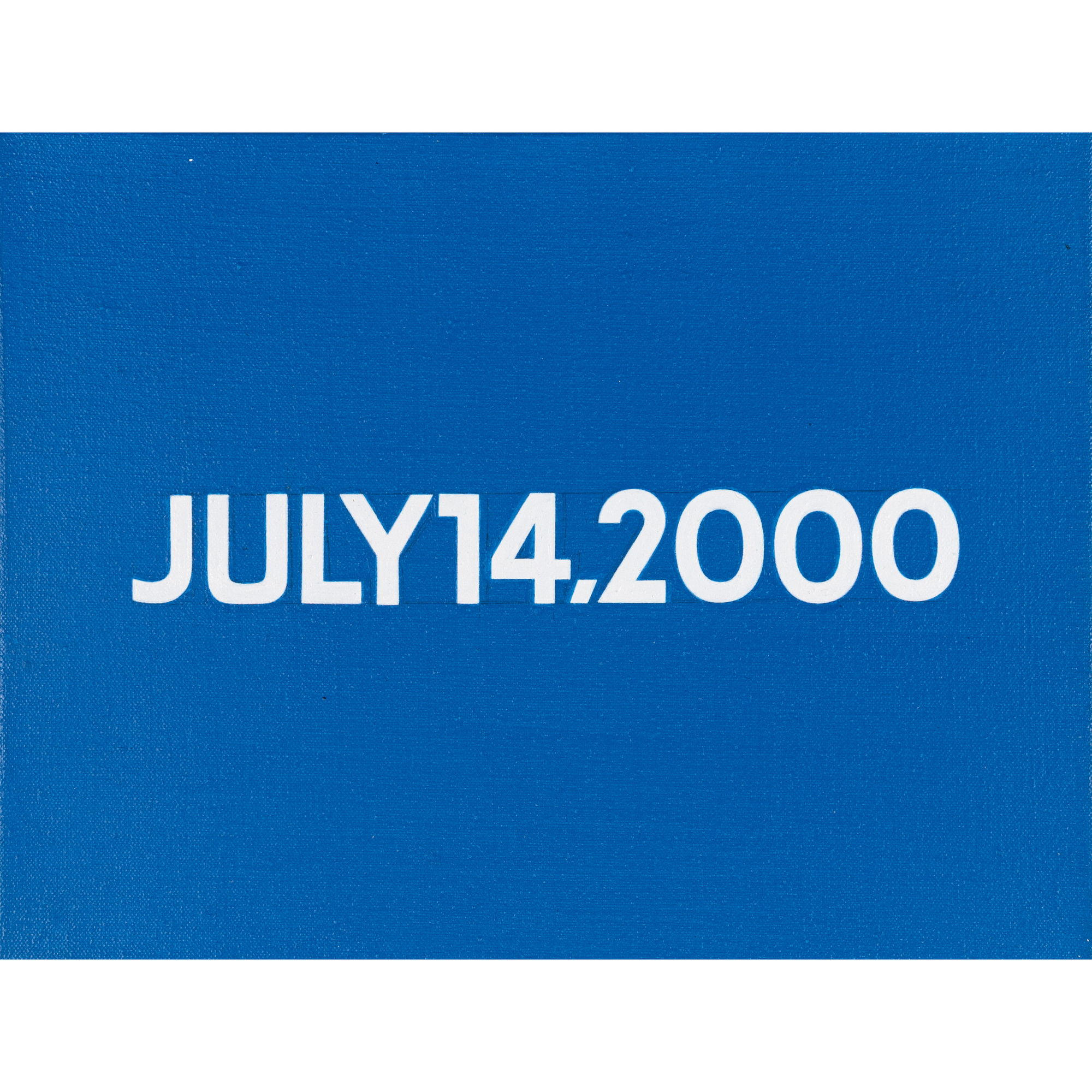
"FRIDAY"JULY 14, 2000 ("TODAY" SERIES NO.26)
| Technique | liquitex on canvas |
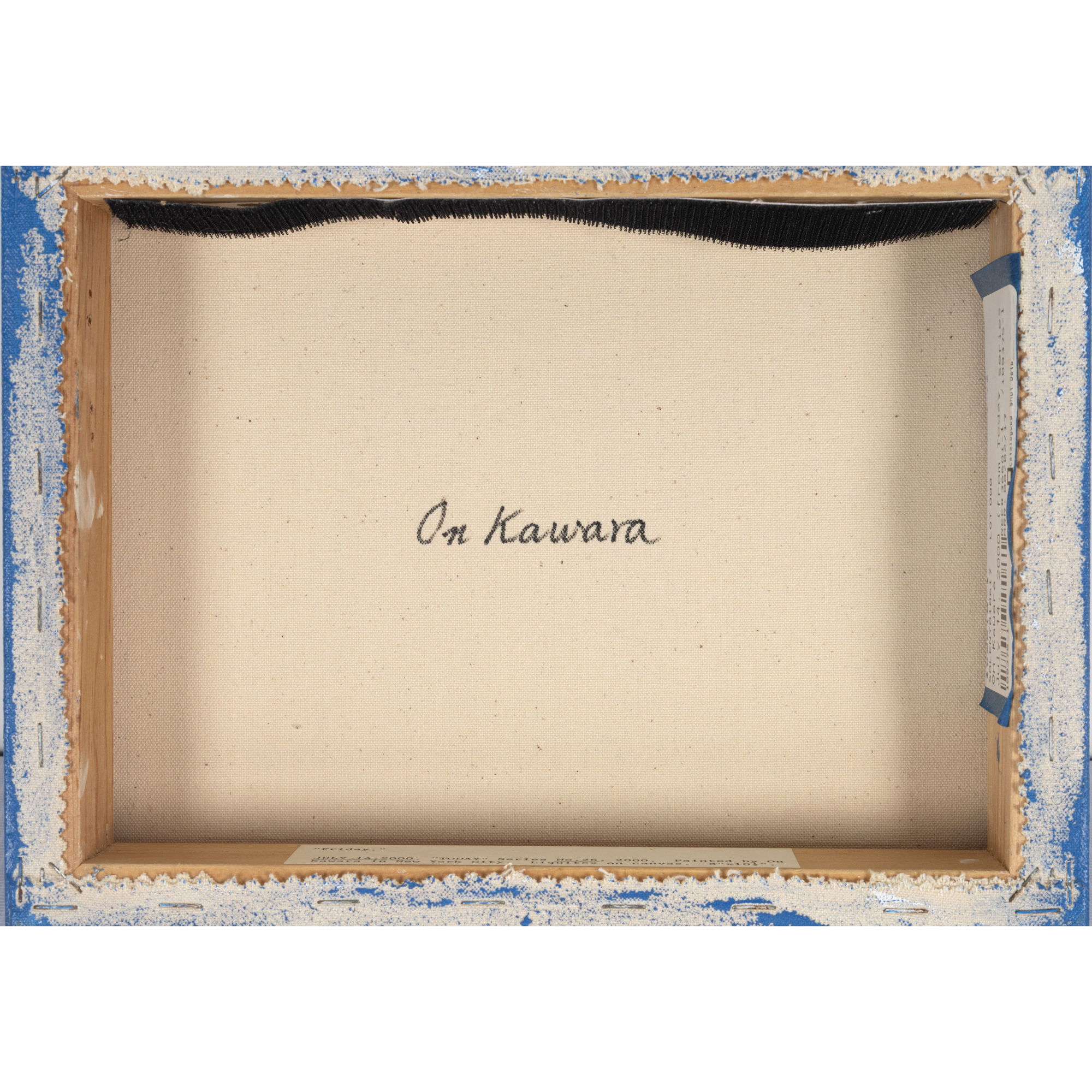
| Signature | signed on the reverse "On Kawara" |
| Size | 20.3×26.7 cm |
| Year of the work | 2000 |
| Exhibition | "The Encyclopedia of Masamichi Katayama "Life is hard... Let's go shopping."", Tokyo Opera City Art Gallery, April 8 - June 25, 2017, Exhibition catalogue pp. 192, 216, 218, cat. no. 441 |
| PROVENANCE | Taro Nasu Gallery, Tokyo<br>Phillips New York, The Katayama Collection, September 19, 2017, Lot 016 |
HIGHLIGHT
Kawara On (1933–2014) is regarded as one of the key figures associated with postwar conceptual art. During the 1960s- a historical moment when the modernist artistic paradigm was increasingly challenged and new artistic practices such as conceptual art were emerging, Kawara gradually transformed painting into a conceptual medium for recording time and lived existence. On January 4, 1966, he initiated the long-term Today Series (also known as the Date Paintings), a project that would continue for several decades.
Within this series, the artist employed an extremely restrained approach, inscribing the date of its creation in sans-serif lettering on a monochrome ground. Each painting had to be completed on the day it was made; if it was not finished before midnight, the work would be destroyed.
The present work, JULY 14, 2000, continues the consistent formal language of the Today Series: a monochrome background and white date lettering constitute the entirety of the pictorial elements. Within this radically reduced visual structure, time is transformed into a form of existence that can be recorded and marked. Through the daily repetition of this act, Kawara translated the passage of individual life into an ongoing conceptual practice, reflecting on the endless flow of time and the condition of human existence.
Between 1966 and 2013, Kawara produced approximately three thousand Date Paintings in more than 130 cities around the world. Following the artist’s death in 2014, his representing gallery announced his passing with a single sentence: “Kawara On lived 29,771 days.” This numerical articulation of a life’s duration resonates profoundly with the artist’s lifelong engagement with time and existence.
CONDITION REPORT